情報学類 オペレーティングシステム II					2008年02月05日

                                       筑波大学システム情報工学研究科
                                       コンピュータサイエンス専攻, 電子・情報工学系
                                       新城 靖
                                       <yas@is.tsukuba.ac.jp>
このページは、次の URL にあります。
http://www.coins.tsukuba.ac.jp/~yas/coins/os2-2007/2008-02-05
あるいは、次のページから手繰っていくこともできます。
http://www.coins.tsukuba.ac.jp/~yas/
http://www.cs.tsukuba.ac.jp/~yas/
高橋浩和, 小田逸郎, 山幡為佐久: "Linuxカーネル2.6解読室",フトバンククリエイティブ (2006/11/18). ISBN-13: 978-4797338263.
Marshall Kirk McKusick, George V. Neville‐Neil (著), 歌代 和正, 砂原 秀樹(翻訳): "BSDカーネルの設計と実装―FreeBSD詳解", アスキー (2005/10/18). ISBN-13: 978-4756146793. Marshall Kirk McKusick, George V. Neville-Neil: "The Design And Implementation Of The Freebsd Operating System Addison-Wesley (2004/7/30). ISBN-13: 978-0201702453
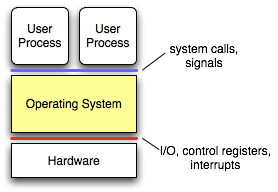
図? オペレーティング・システムの働き
struct timeval {
	long    tv_sec;         /* seconds since Jan. 1, 1970 */
	long    tv_usec;        /* and microseconds */
};

int gettimeofday(struct timeval *tp, struct timezone *tzp)

struct timeval  tv;
gettimeofday(&tv, NULL);
μ(マイクロ)秒単位の時刻を返す。POSIX 1003.1, 2003 では、ナノ秒単位。
struct timespec  {
    time_t tv_sec;            /* Seconds.  */
    long int tv_nsec;         /* Nanoseconds.  */
};

int clock_settime(clockid_t clock_id, const struct timespec *tp);
int clock_gettime(clockid_t clock_id, struct timespec *tp);
int clock_getres(clockid_t clock_id, struct timespec *res);
struct itimerval {
    struct timeval it_interval; /* next value */
    struct timeval it_value;    /* current value */
};

int setitimer(int which, const struct itimerval *value,
    struct itimerval *ovalue);
int  select(int nfds, fd_set *readfds, fd_set *writefds, fd_set *exceptfds,
     		struct timeval *timeout);
int  poll(struct pollfd *fds, nfds_t nfds, int timeout);
ネットワーク・プログラムでよく使う。複数の入力を監視する。指定された時
間、入力がなければ、システム・コールから復帰する。
なにもしない時間切れ。
unsigned int sleep(unsigned int seconds);
int usleep(useconds_t usec)
int nanosleep(const struct timespec *rqtp, struct timespec *rmtp);
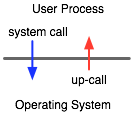
図? システムコールとアップコール
アップコールは、システム・コールの逆に、オペレーティング・システムがユー ザ・レベルの関数を呼び出す。 ウインドウ・システムのプログラムでは、call-back 関数やlistener として利 用されている。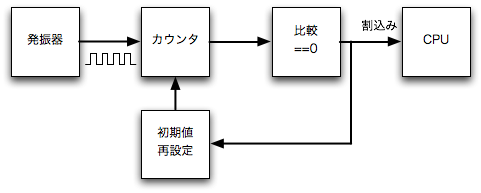
図? タイマ関連のハードウェアの基本モデル
2つの機能がある。
その他の割込み
/* kernel/timer.c */
u64 jiffies_64 __cacheline_aligned_in_smp = INITIAL_JIFFIES;
...
void do_timer(unsigned long ticks)
{
        jiffies_64 += ticks;
        update_times(ticks);
}

/* kernel/time/tick-common.c */
static void tick_periodic(int cpu)
{
...
                do_timer(1);
...
        update_process_times(user_mode(get_irq_regs()));
...
}
void tick_handle_periodic(struct clock_event_device *dev)
{
...
        tick_periodic(cpu);
...
}

/* include/asm-x86/i8253.h */
extern struct clock_event_device *global_clock_event;

/* include/asm-x86/mach-default/do_timer.h */
static inline void do_timer_interrupt_hook(void)
{
        global_clock_event->event_handler(global_clock_event);
}

/* arch/x86/kernel/time_32.c */
irqreturn_t timer_interrupt(int irq, void *dev_id)
{
...
        do_timer_interrupt_hook();
...
}

/* arch/x86/mach-default/setup.c */
static struct irqaction irq0  = {
        .handler = timer_interrupt,
        .flags = IRQF_DISABLED | IRQF_NOBALANCING | IRQF_IRQPOLL,
        .mask = CPU_MASK_NONE,
        .name = "timer"
};
...
void __init time_init_hook(void)
{
        irq0.mask = cpumask_of_cpu(0);
        setup_irq(0, &irq0);
}
/* kernel/time.c */
asmlinkage long sys_gettimeofday(struct timeval __user *tv, struct timezone __user *tz)
{
        if (likely(tv != NULL)) {
                struct timeval ktv;
                do_gettimeofday(&ktv);
                if (copy_to_user(tv, &ktv, sizeof(ktv)))
                        return -EFAULT;
        }
        if (unlikely(tz != NULL)) {
                if (copy_to_user(tz, &sys_tz, sizeof(sys_tz)))
                        return -EFAULT;
        }
        return 0;
}

/* kernel/time/timekeeping.c */

struct timespec xtime __attribute__ ((aligned (16)));
...
void do_gettimeofday(struct timeval *tv)
{
        struct timespec now;

        __get_realtime_clock_ts(&now);
        tv->tv_sec = now.tv_sec;
        tv->tv_usec = now.tv_nsec/1000;
}

static inline void __get_realtime_clock_ts(struct timespec *ts)
{
        unsigned long seq;
        s64 nsecs;

        do {
                seq = read_seqbegin(&xtime_lock);

                *ts = xtime;
                nsecs = __get_nsec_offset();

        } while (read_seqretry(&xtime_lock, seq));

        timespec_add_ns(ts, nsecs);
}

static inline s64 __get_nsec_offset(void)
{
        cycle_t cycle_now, cycle_delta;
        s64 ns_offset;

        /* read clocksource: */
        cycle_now = clocksource_read(clock);

        /* calculate the delta since the last update_wall_time: */
        cycle_delta = (cycle_now - clock->cycle_last) & clock->mask;

        /* convert to nanoseconds: */
        ns_offset = cyc2ns(clock, cycle_delta);

        return ns_offset;
}

static void update_wall_time(void)
{
...
                        xtime.tv_sec++;
...
        xtime.tv_nsec = (s64)clock->xtime_nsec >> clock->shift;
...
}

/* kernel/timer.c */
static inline void update_times(unsigned long ticks)
{
        update_wall_time();
        calc_load(ticks);
}
/* kernel/sched.c */
void scheduler_tick(void)
{
        struct rq *rq = cpu_rq(cpu);
        struct task_struct *curr = rq->curr;
...
        curr->sched_class->task_tick(rq, curr);
...
}

/* kernel/timer.c */
void update_process_times(int user_tick)
{
...
	scheduler_tick();
...
}
/* kernel/sched_fair.c */
static void task_tick_fair(struct rq *rq, struct task_struct *curr)
{
        struct cfs_rq *cfs_rq;
        struct sched_entity *se = &curr->se;

        for_each_sched_entity(se) {
                cfs_rq = cfs_rq_of(se);
                entity_tick(cfs_rq, se);
        }
}

static void entity_tick(struct cfs_rq *cfs_rq, struct sched_entity *curr)
{
        /*
         * Update run-time statistics of the 'current'.
         */
        update_curr(cfs_rq);

        if (cfs_rq->nr_running > 1 || !sched_feat(WAKEUP_PREEMPT))
                check_preempt_tick(cfs_rq, curr);
}

static void update_curr(struct cfs_rq *cfs_rq)
{
        struct sched_entity *curr = cfs_rq->curr;
        u64 now = rq_of(cfs_rq)->clock;
        unsigned long delta_exec;
        delta_exec = (unsigned long)(now - curr->exec_start);
        __update_curr(cfs_rq, curr, delta_exec);
        curr->exec_start = now;
...
}

static inline void
__update_curr(struct cfs_rq *cfs_rq, struct sched_entity *curr,
              unsigned long delta_exec)
{
...
        curr->sum_exec_runtime += delta_exec;
        delta_exec_weighted = delta_exec;
...
        curr->vruntime += delta_exec_weighted;
        if (first_fair(cfs_rq)) {
                vruntime = min_vruntime(curr->vruntime,
                                __pick_next_entity(cfs_rq)->vruntime);
        } else
                vruntime = curr->vruntime;

        cfs_rq->min_vruntime =
                max_vruntime(cfs_rq->min_vruntime, vruntime);
}

static void
check_preempt_tick(struct cfs_rq *cfs_rq, struct sched_entity *curr)
{
        unsigned long ideal_runtime, delta_exec;

        ideal_runtime = sched_slice(cfs_rq, curr);
        delta_exec = curr->sum_exec_runtime - curr->prev_sum_exec_runtime;
        if (delta_exec > ideal_runtime)
                resched_task(rq_of(cfs_rq)->curr);
}
CPU スライスを使い果たしたら、resched_task() で、次のプロセス(task)に切
り替える。
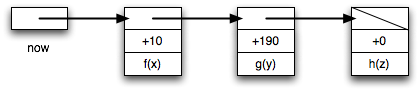
図? callout 待ち行列(1)
f(x) を取り除いて実行した後。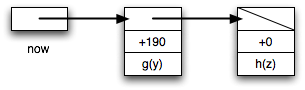
図? callout 待ち行列(2)
g(y), h(z) を取り除いて実行した後。
図? callout 待ち行列(3)
struct timer_list {
        struct list_head entry;
        unsigned long expires;

        void (*function)(unsigned long);
        unsigned long data;

        struct tvec_t_base_s *base;
};
jiffies が増加して expires (絶対時刻)に達すれば、(*function)(data) を呼ぶ。
主に次の関数で操作する。 include/linux/timer.h:
static inline void add_timer(struct timer_list *timer)
{
        BUG_ON(timer_pending(timer));
        __mod_timer(timer, timer->expires);
}
利用例。
    timer->expires = jiffies + delay;
    timer->data = (unsigned long)data;
    timer->function = func;
    add_timer(timer);
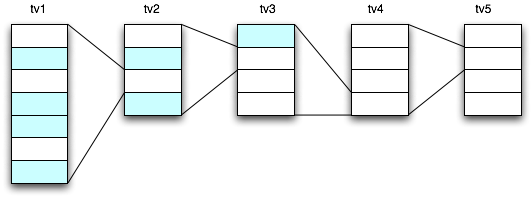
図? Linux tv
/* timer.c: */
static void run_timer_softirq(struct softirq_action *h)
{
        tvec_base_t *base = __get_cpu_var(tvec_bases);

        hrtimer_run_queues();

        if (time_after_eq(jiffies, base->timer_jiffies))
                __run_timers(base);
}

static inline void __run_timers(tvec_base_t *base)
{
        struct timer_list *timer;
...
        while (time_after_eq(jiffies, base->timer_jiffies)) {
                struct list_head work_list;
                struct list_head *head = &work_list;
                int index = base->timer_jiffies & TVR_MASK;
...
                ++base->timer_jiffies;
                list_replace_init(base->tv1.vec + index, &work_list);
                while (!list_empty(head)) {
                        void (*fn)(unsigned long);
                        unsigned long data;
..
                        timer = list_entry(head->next,struct timer_list,entry);
                        fn = timer->function;
                        data = timer->data;
...
                                fn(data);
		}
	}
}
/* kernel/itimer.c */
int do_setitimer(int which, struct itimerval *value, struct itimerval *ovalue)
{
        struct task_struct *tsk = current;
        struct hrtimer *timer;
...
        switch (which) {
        case ITIMER_REAL:
...
                timer = &tsk->signal->real_timer;
...
                tsk->signal->it_real_incr =
                        timeval_to_ktime(value->it_interval);
                expires = timeval_to_ktime(value->it_value);
                if (expires.tv64 != 0)
                        hrtimer_start(timer, expires, HRTIMER_REL);
...
        }
}
/* kernel/hrtimer.c */
int
hrtimer_start(struct hrtimer *timer, ktime_t tim, const enum hrtimer_mode mode)
{
...
	base = lock_hrtimer_base(timer, &flags);
	new_base = switch_hrtimer_base(timer, base);
        timer->expires = tim;
        enqueue_hrtimer(timer, new_base);
}

static void enqueue_hrtimer(struct hrtimer *timer,
                            struct hrtimer_clock_base *base, int reprogram)
{
        struct rb_node **link = &base->active.rb_node;
        while (*link) {
                parent = *link;
                entry = rb_entry(parent, struct hrtimer, node);
                if (timer->expires.tv64 < entry->expires.tv64) {
                        link = &(*link)->rb_left;
                } else {
                        link = &(*link)->rb_right;
                        leftmost = 0;
                }
        }
        if (leftmost) {
...
                base->first = &timer->node;
        }
        rb_link_node(&timer->node, parent, link);
...
}
タイマ割込みの run_timer_softirq() から呼ばれる。
void hrtimer_run_queues(void)
{
...
        for (i = 0; i < HRTIMER_MAX_CLOCK_BASES; i++)
                run_hrtimer_queue(cpu_base, i);
}

static inline void run_hrtimer_queue(struct hrtimer_cpu_base *cpu_base,
                                     int index)
{
        while ((node = base->first)) {
                struct hrtimer *timer;
                enum hrtimer_restart (*fn)(struct hrtimer *);
                int restart;
...
                fn = timer->function;
                __remove_hrtimer(timer, base, HRTIMER_STATE_CALLBACK, 0);
                restart = fn(timer);
...
                timer->state &= ~HRTIMER_STATE_CALLBACK;
                if (restart != HRTIMER_NORESTART) {
                        enqueue_hrtimer(timer, base, 0);
                }
        }
}